Before winter, fix exterior problems that allow water or cold air into the home first: active roof leaks, damaged siding, blocked or loose gutters, deteriorated seals, and doors or windows that no longer close correctly.
Before the first snow, a pre-winter exterior check does not mean every worn component needs immediate replacement.
For homeowners considering home exterior services in Lockport, the following checklist helps separate urgent concerns from items that can simply be monitored.
What Should Lockport Homeowners Fix First?
Start with defects that are already allowing water inside or leaving the structure exposed. Cosmetic wear can often wait for further evaluation, but active leaks, open roof damage, drainage failures, and gaps in the exterior deserve earlier attention.
Use this order when deciding what to address before winter:
| Priority | Why It Matters | Who Should Check It |
| Active water intrusion | Continued moisture can affect ceilings, walls, insulation, and other materials | Roofing or exterior professional |
| Open or storm-damaged roof areas | Missing or displaced materials can leave the roof vulnerable to additional moisture | Roofing professional |
| Failing drainage | Overflowing or disconnected gutters can send water where it should not go | Gutter professional |
| Open siding or trim | Gaps can expose underlying materials to wind-driven moisture | Siding professional |
| Major door or window air leakage | Gaps can reduce comfort and allow unwanted outdoor air into the home | Window or door professional |
Walk around the property from the ground and note changes rather than trying to diagnose everything yourself. Water staining, visibly loose materials, persistent gaps, or components pulling away from the home are more useful warning signs than age alone.
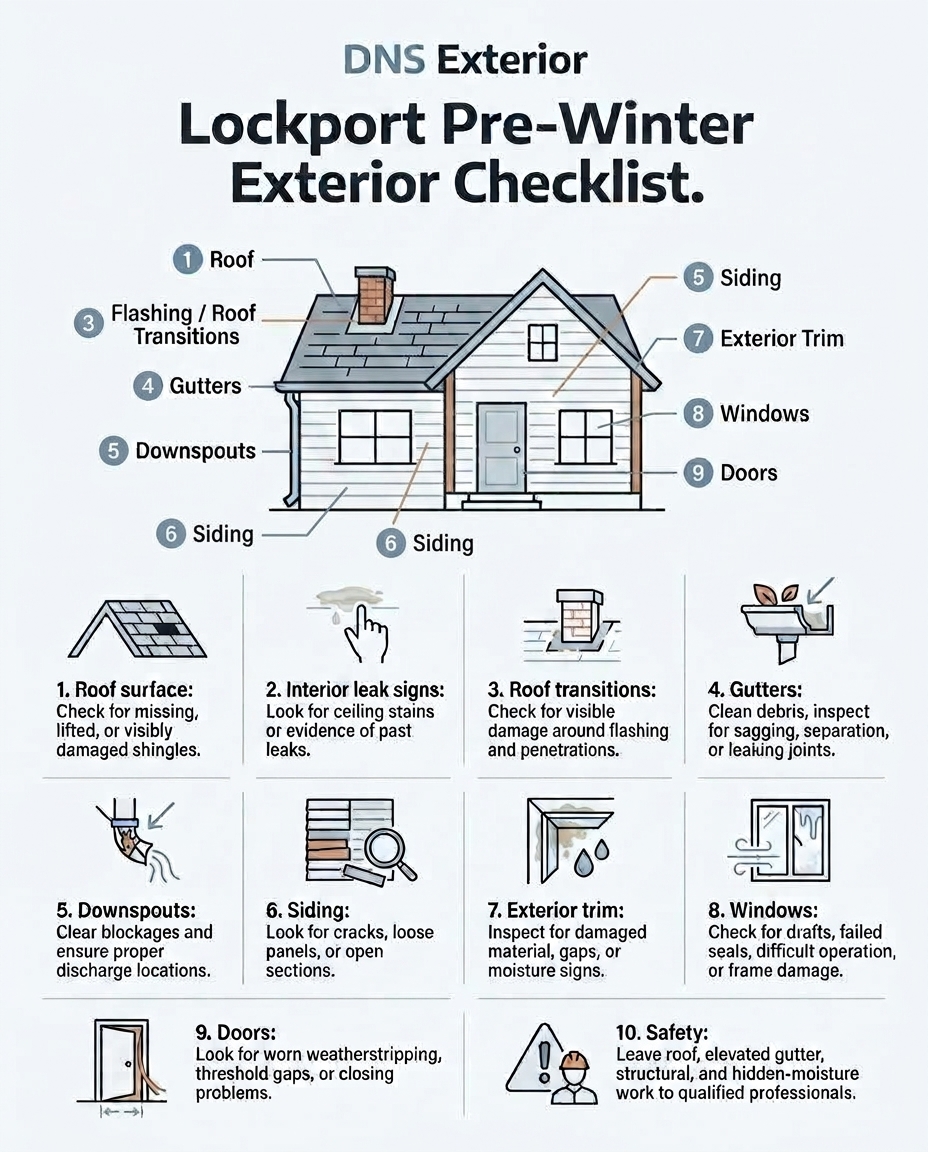
Use this 10-point checklist to identify exterior areas that may need attention before Lockport’s first snow.
Roof Checks Before the First Snow
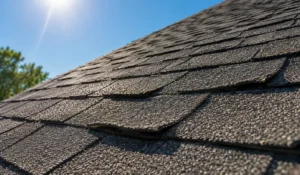
Look at the roof from a safe location on the ground. Missing shingles, lifted edges, obvious storm damage, and displaced materials deserve attention before they are covered by snow.
Inside the home, check ceilings and attic-accessible areas for stains or signs of a past leak. A mark that appears dry today can still indicate a vulnerable area, especially if it becomes darker or larger after rain.
Flashing around roof penetrations, walls, chimneys, and similar transitions is another area where problems may develop. These locations should be evaluated when there is visible damage or a history of leakage.
If you need roof repair in Lockport, describe when the problem appears, where you notice staining, and whether the home recently experienced wind or storm damage. That information can help focus the inspection.
Do not assume a small roof leak should automatically wait until spring. An active leak or exposed roof area should be assessed before winter weather can complicate access and repairs.
Gutters and Downspouts
Gutters need a clear path to collect roof runoff and move it through the downspouts. Autumn debris can obstruct that path just as colder weather arrives.
From the ground, look for gutters that sag, pull away from the fascia, or appear out of alignment. During safe rainy conditions, watch for water spilling over the edge or leaking from joints instead of moving toward the downspouts.
Downspouts should also discharge water away from areas where it can collect against the house. A blocked or disconnected downspout can make an otherwise functional gutter system ineffective.
Professional gutter services in Lockport may be appropriate when you see repeated overflow, loose sections, leaking joints, separation from the home, or drainage problems that return after ordinary debris is removed.
DNS Exterior provides residential gutter services, with additional information available on its gutter service page.
Siding and Exterior Trim
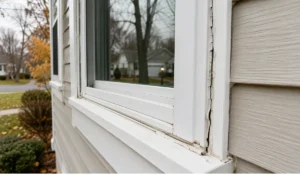
Check siding for cracks, loose or displaced panels, damaged sections, and openings around exterior penetrations. Pay particular attention to places where siding meets windows, doors, rooflines, utility penetrations, and trim.
Damaged trim also deserves attention because it often protects transitions and edges in the exterior assembly. Peeling finishes alone do not always signal an urgent problem, but soft material, open joints, visible gaps, or recurring moisture are reasons to investigate further.
Look for changes rather than trying to determine the cause from appearance alone. Staining may have several possible sources, and replacing siding without identifying the moisture source can leave the underlying problem unresolved.
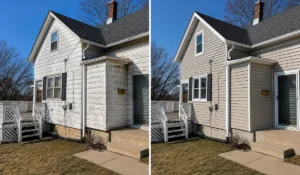
A siding contractor in Lockport can evaluate whether a localized siding repair is reasonable or whether damage extends beyond the visible area. The goal before winter is to close significant openings and address areas where water may reach materials that should remain protected.
Doors and Windows
Doors and windows should close, latch, and seal without excessive force. Before colder weather settles in, check for noticeable drafts, worn weatherstripping, damaged thresholds, frame deterioration, and gaps around the perimeter.
Windows that are difficult to operate or lock also deserve attention. Fog or haze trapped between panes can indicate a problem with an insulated-glass unit, although it does not by itself tell you whether the entire window must be replaced.
For doors, inspect the sweep or threshold and look for daylight around a closed unit. Some air leakage can result from worn weatherstripping or adjustment problems rather than failure of the complete door.
That distinction matters when considering door replacements in Lockport. Replacement should not be treated as the automatic answer to every draft. The condition of the frame, door, hardware, seals, and surrounding opening should be considered first.
The same approach applies to windows: identify the source of the problem before deciding between sealing, repair, or replacement.
What Homeowners Should Not DIY Before Winter
A visual ground-level inspection is useful. Risky climbing is not.
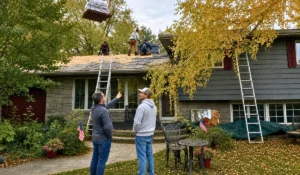
Avoid walking on a wet, frosty, snowy, or icy roof to inspect shingles or clear debris. Elevated gutter work can also become hazardous when ladders are placed on uneven, wet, or frozen surfaces.
Professional evaluation is also appropriate when you see signs of structural movement, widespread exterior damage, or moisture that appears to be hidden inside a wall, roof, or framed opening. Those situations can require more than a surface repair.
Homeowners can safely document many problems by taking photos from the ground, noting where water appears during rain, and recording which doors or windows have recurring issues.
For broader seasonal safety planning, homeowners can also consult Ready.gov’s winter-weather preparedness resources. U.S. Department of Energy Energy Saver guidance is a useful reference for weatherization topics such as reducing unwanted air leakage around the home.
Frequently Asked QuestionsWhat should I inspect before the first snow?Prioritize the roof, gutters and downspouts, siding and trim, windows, and exterior doors. Look for active leaks, missing or loose materials, blocked drainage, open gaps, deteriorated seals, and components that no longer close or function correctly. Ground-level observations are usually enough to identify areas that need professional inspection. Can roof repairs wait until spring?Some non-urgent maintenance may be scheduled later, but active leakage, missing materials, storm openings, or other conditions that leave the roof exposed should be evaluated sooner. Waiting through winter can allow an existing moisture problem to continue and may make access more difficult. Why should gutters be checked before winter?Gutters need to move roof runoff through the downspouts without overflowing or leaking. Autumn leaves and other debris can reveal existing problems such as poor drainage, sagging sections, loose connections, or blocked downspouts. Clearing debris also makes it easier to see whether the system itself needs repair. Can siding be repaired in fall?Some siding repairs can be completed in fall, depending on the material, weather, extent of the damage, and installation requirements. The more important question is whether an open or damaged area is exposing underlying materials to moisture. A professional can determine the appropriate repair and whether conditions are suitable for the work. |
Get Exterior Problems Checked Before Winter
Before the first snow, small exterior defects are easier to prioritize when you know which ones are allowing water in, interfering with drainage, or creating an open path through the building exterior.
DNS Exterior provides roofing, siding, gutter, window, and door services for homeowners in and around Lockport. If your pre-winter walk-around reveals an active leak, damaged exterior material, drainage problem, or opening that needs closer inspection, contact DNS Exterior to schedule an evaluation before winter conditions make the problem harder to address.